
Zimpapers Writers
As the sun rose on a fresh academic year, excitement buzzed through the air at schools nationwide yesterday, marking the opening day of the 2026 school calendar.
Bright-eyed Grade Ones and eager Form Ones stepped into classrooms, their hearts racing with a mix of anticipation and nervousness. For many, this moment was the realisation of dreams forged during the summer months, when stories of school adventures danced in their imaginations.
Yet, amid the joyful laughter and enthusiastic chatter, a poignant reminder emerged: the journey into education is not without its challenges. Some little ones, overwhelmed by the sudden shift from home comforts to the structured world of learning, found themselves longing for the familiar embrace of their families after just two hours in class.
As teachers rallied to nurture these fledgling spirits, the day evolved into a tapestry of emotions, weaving together joy, anxiety, and the promise of growth. With each passing moment, students began to shed their apprehensions, engaging with peers and discovering the wonders of their new environments. Yesterday was not just an opening of doors; it was a celebration of new beginnings, a canvas upon which the stories of countless young learners will be painted throughout the year.
A visit to several schools in Harare, including Mufakose 1 High, Zengeza 2 High, Riverside Junior and North West High, showed that the day went smoothly, with some teachers introducing topics to be covered. Some Grade Ones were shown school-related films to familiarise them with the new tasks ahead.
Primary and Secondary Education Minister Dr Torerayi Moyo said the Government is committed to bridging the digital divide through the acquisition of essential information and communication technology gadgets for remote schools. He made the remarks while handing over digital devices provided by UNICEF to St Michael’s Mambo Primary School in Buhera District.
Dr Moyo said that, in line with the Government’s mantra of leaving no one and no place behind, all previously marginalised schools would be considered for computerisation.
“We are not merely distributing equipment; we are unlocking opportunities, strengthening equity and investing in the future of our children, particularly those in rural and disadvantaged communities,” he said.
He noted that Zimbabwe has made commendable progress towards universal access to primary education, with over 10 500 schools nationwide and enrolment figures exceeding 4.7 million learners.
“This achievement has been significantly enhanced by the leadership of President Emmerson Mnangagwa during the Second Republic, who has prioritised educational reforms and resource allocation.”
Dr Moyo added that the Government was committed to bridging the digital and infrastructure divide in rural areas.
“Initiatives aimed at expanding access to technology and improving infrastructure are transforming the educational landscape, empowering rural communities with essential tools for a brighter future. Investments in connectivity, including the rollout of internet access and better roads, not only foster educational advancement but also promote economic growth and social development,” he said.
“These proactive measures are paving the way for a more inclusive society where every learner can thrive and contribute to the nation’s progress,” he said.
The Minister commended development partners for working with Government to support the computerisation of educational institutions, saying the move would help improve education delivery as espoused in the Heritage-Based Education 5.0 model.
Development partners such as UNICEF and the Global Partnership for Education have invested in digital learning resources, significantly enhancing learning outcomes and improving learner welfare.
Dr Moyo said the primary objective of handing over digital devices is to promote blended teaching and learning in disadvantaged schools. Blended learning integrates traditional face-to-face teaching with digital and technology-enabled learning, allowing for improved learner engagement, access to diverse and up-to-date resources, and enhanced lesson preparation, delivery and assessment by teachers.
It also supports remedial, catch-up and differentiated learning, while fostering greater resilience of the education system in times of disruption.
He said St Michael’s Mambo Primary School is a prime example of where this initiative can make a significant impact. Learners had already been introduced to basic computer lessons using limited and largely second-hand equipment. The additional devices received yesterday are expected to expand capacity, improve quality and strengthen digital inclusion, empowering both teachers and learners.
The Heritage-Based Education 5.0 Curriculum emphasises relevance, innovation, problem-solving and production, equipping learners with the skills needed for success. By integrating ICT tools, learners can explore their heritage while engaging with modern technologies, fostering creativity, critical thinking and practical skills.
“This initiative aligns with the Ministry of Primary and Secondary Education’s ICT Strategy in Education, providing a structured roadmap for digital infrastructure development, access to e-learning resources, teacher capacity development, sustainability and innovation, as well as good governance and accountability. This handover is a key step towards implementing this strategy and enhancing the quality of education,” he said.
Meanwhile, in Kwekwe, pouring rain could not dampen the excitement as learners at the newly built Globe and Phoenix Primary School reported for lessons yesterday, marking the start of the 2026 academic year in permanent classrooms after two years of hardship.
Clad in raincoats and clutching umbrellas, learners trudged through the wet conditions with visible excitement, eager to begin classes at a school that symbolises hope and resilience. Teachers also turned up early, ready to welcome learners to a fresh start.
The new school replaces makeshift tents that had served as classrooms since March 2023, after illegal mining activities destabilised the ground beneath the original school, causing a classroom to collapse and forcing its closure.
At the height of the challenge, 1 348 learners and 45 teachers were relocated to Russell Primary School, where overcrowding, inadequate sanitation, dust, heat and flooding severely disrupted learning.
The situation was reversed through a Government partnership with The Church of Jesus Christ of Latter-day Saints, which funded the construction of the new school, complete with proper classrooms, ablution facilities and sporting amenities.
Acting Kwekwe District Development Coordinator, Mr Reason Machina, said the opening of the school marked a major milestone for the community.
“This is a new dawn for the pupils, teachers and the entire Kwekwe community. After two difficult years, full-scale lessons have now resumed in a safe and conducive environment. We are happy to note that Globe and Phoenix Primary School in Kwekwe has commenced full-scale lessons at the new school following the decommissioning of the old school. The pupils and teachers are all excited about this development,” he said.
Parents described the development as a huge relief, saying conditions in the tented classrooms had forced some families to withdraw their children.
“Our children endured flooding, dust, heat and a shortage of toilets. Furniture and textbooks were damaged, and learning suffered. We are grateful that our children finally have a proper school. Many parents are now re-enrolling their children,” said parent Mr Arnold Mkuki.
At the commissioning of the school in October last year, Dr Moyo said public-private partnerships were central to infrastructure development under Vision 2030. He reiterated that the Second Republic remains committed to ensuring that every child learns in a safe and conducive environment, leaving no one and no place behind.
Related Posts
RBZ strategic plan maps out path to currency stability
Tapiwanashe Mangwiro Senior Business Reporter The Reserve Bank of Zimbabwe …
Govt to increase ZiG circulation
Sikhulekelani Moyo-Zimpapers Business Hub GOVERNMENT is working on improving the…
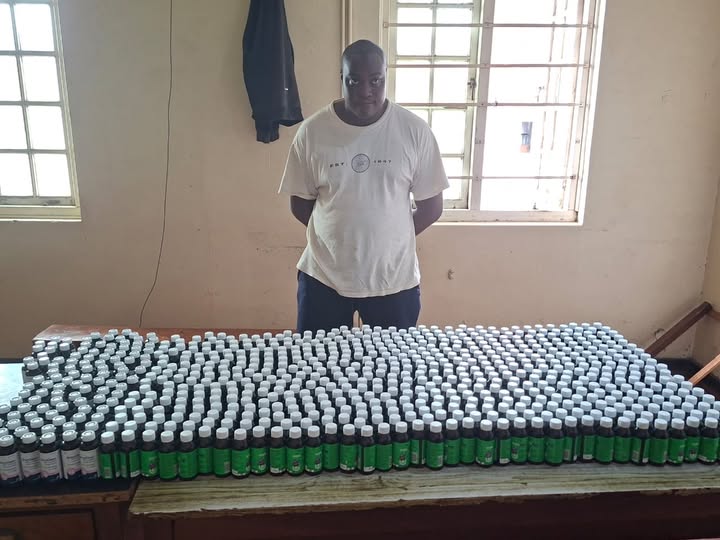
BRONCLEER BONANZA, BENYLIN BLITZ: Cough syrup cartel busted in border sting
POLICE have smashed a suspected cough syrup smuggling ring after…